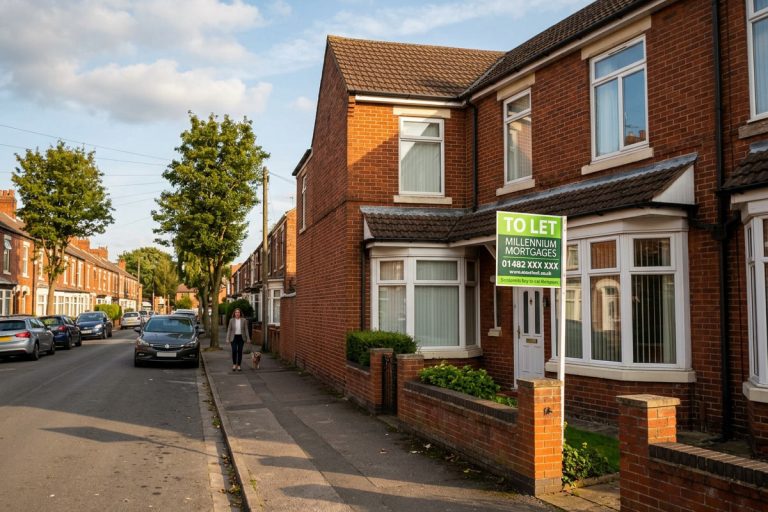
Turning your current home into a rental property is a well-trodden path for UK homeowners in 2026. Whether you’re upsizing to a larger family home, relocating for work, or moving in with a partner, you don’t necessarily have to sell. Instead, you can change your residential mortgage to a buy-to-let arrangement and keep the property generating rental income for years to come.
“At Millennium Mortgages, we deal with many customers who have had a change of circumstance and need to let out their home. One of the most common is in a new relationship where one party would like to retain their current residential property and move in with their new partner. Or even to assist the purchase of a new property by letting out an existing home.”
This guide walks you through every stage of the process, from understanding your two main options to meeting lender criteria, managing costs, and avoiding the pitfalls that catch out first-time landlords.
Reviewed by: Mark Thurman – Mortgage & Protection Adviser & Director.
Last updated: June 2026
Experience: Mortgage adviser since 1991, specialising in residential, remortgage and buy-to-let lending across the UK.
Key Takeaways
- You typically have two routes: request short-term consent to let from your current mortgage lender (usually 6–12 months), or fully remortgage to a dedicated buy-to-let mortgage if you plan to rent long term.
- Most buy-to-let mortgages require at least 25% equity in the property, as lenders generally cap loan-to-value (LTV) at 75%.
- Lenders generally require that rental income cover at least 125% of the monthly interest-only mortgage payment, based on a stress-test rate of around 5%.
- Switching involves costs including arrangement fees, early repayment charges, valuation fees and legal fees, plus ongoing landlord responsibilities such as safety checks and tax declarations.
- Letting without consent or an appropriate mortgage can breach your mortgage contract, potentially leading to repossession.
- Millennium Mortgages arranges buy-to-let mortgages across the UK, with experienced mortgage broker teams in Hull, Huddersfield, Wakefield, Beverley and Halifax offering strong local market knowledge.
Disclaimer
- Mortgage criteria varies by lender
- Rental income coverage and stress tests can change and are impacted by personal circumstances
- Information correct as of June, 2026
Can I Change My Residential Mortgage to a Buy-to-Let Mortgage?
Many UK homeowners in 2026 are choosing to keep their existing property as a rental when life circumstances change. Data from UK Finance shows let-to-buy transactions, where homeowners remortgage their current home to buy to let while purchasing a new property, rose by 18.2% year-on-year through 2024–2025, a trend continuing into 2026.
“At Millennium Mortgages, we’ve noticed an uplift in people opting to keep their current home and releasing equity to buy their new property. This is referred to as a Let To Buy, and not only does this make you more attractive as buyers for a new property, but it retains the asset as an investment.”
Mike Plaster, Mortgage & Protection Adviser
You usually have two routes to change your mortgage from residential to rental use:
- Ask your current lender for temporary consent to let
- Remortgage to a dedicated buy-to-let mortgage if renting will be long-term
Lenders treat this as a fresh underwriting decision. It is not an automatic switch. Approval depends on how much equity you hold, your expected monthly rental income, your credit history and your individual circumstances.
Most buy-to-let mortgages are interest-only, meaning monthly payments cover only the interest, with the full mortgage loan repaid at the end of the mortgage term. Buy-to-let mortgages generally carry higher fees and interest rates compared to residential mortgages due to perceived higher risk. This means your projected rental income and tax position must be checked carefully before proceeding.
A mortgage advisor at Millennium Mortgages can quickly assess whether you meet UK lender affordability criteria and whether consent to let or a full remortgage is the more suitable option for your situation.
Consent to Let vs Full Buy-to-Let Remortgage
When switching to a buy-to-let arrangement, you’ll encounter two distinct paths, each suited to different circumstances.
| Factor | Consent to Let | Full Buy-to-Let Remortgage |
| Duration | Typically 6–12 months | Indefinite |
| Lender | Stays with the existing lender | Often moves to a new lender |
| Costs | Admin fee (around £75) + possible rate loading | Full arrangement fees, valuation fee, and legal fees |
| Best for | Temporary moves, job secondments, trial cohabitation | Long-term letting, portfolio building |
Consent to let is temporary permission from your lender to rent out your residential property, typically granted for 6 to 12 months.
“Consent to let is generally seen as a temporary measure where somebody plans to move back into the property in the future. In recent years, there has been a trend by some lenders to temporarily increase the interest rate during the consent to let period and add in frequent review periods to ensure customers are on the correct mortgage type.”
Mike Plaster, Mortgage & Protection Adviser
Obtaining consent to let is necessary because renting out a property with a residential mortgage without permission can breach the mortgage terms.
This option suits homeowners expecting to move back in, perhaps after a one-year work secondment abroad or while testing cohabitation with a partner. Lenders may charge an admin fee for granting consent to let, typically around £75, and may also increase your interest rate during the tenancy.
However, consent to let is not guaranteed and may be refused by lenders based on factors such as how long you have owned the property or whether you have mortgage arrears.
A full buy-to-let mortgage makes more sense when:
- You intend to let indefinitely
- You’re building a rental portfolio
- Your current mortgage provider refuses consent to let
- You want access to better mortgage rates from a specialist lender
Millennium Mortgages will compare the total 12–24 month cost of consent to let versus remortgaging to a buy-to-let mortgage, helping you make a decision based on personalised figures rather than guesswork.
Eligibility: Do I Qualify to Convert My Mortgage to a Buy-to-Let?
Each UK lender has its own criteria, but most assess four key areas: equity, projected rental income, personal income and credit history.
Equity Requirements
To change from a residential mortgage to a buy-to-let mortgage, you would typically need at least 25% equity in the property, as most buy-to-let mortgages are capped at a maximum loan-to-value (LTV) of 75%. Some lenders are stricter at 60–70% LTV, while a few offer up to 80% LTV, though at higher interest rates.
For a property with a current market value of £200,000, you’d need at least £50,000 in equity to qualify with most lenders.
“If you have more than the typical 25% equity in the property, you may also have the opportunity to raise additional funds for your requirements, whether that to help with a deposit for an onward purchase or for home improvements.”
Mike Plaster, Mortgage & Protection Adviser
Rental Stress Tests
Lenders don’t simply compare monthly rent against mortgage repayments. Instead, they apply a rental stress test.
When switching to a buy-to-let mortgage, lenders generally require that the rental income cover at least 125% of the monthly interest-only mortgage payment, based on a stress-test rate of around 5%. However, this is subject to change depending on tax position.
For example, on a £150,000 mortgage loan at a 6% stress rate, the monthly interest would be £750. You’d need a projected rent of £938–£1,088 per month to pass the test.
Income and Credit
Many lenders want a minimum earned income of £20,000–£25,000 per year as a backstop, even though the main affordability check focuses on rent. A good credit history is often necessary to secure a buy-to-let mortgage, as lenders may be reluctant to approve applications from individuals with poor credit ratings.
Property Types
Standard houses qualify most easily. Flats above commercial premises, ex-local authority homes, HMOs, or holiday lets face stricter criteria and may require specialist lenders.
Local knowledge matters here: rental yield in Hull averages around £650/month for a 2-bed, while Beverley market-town properties command £800+ for 3-beds.
Many buy-to-let mortgages are unregulated business transactions, unlike residential mortgages, which are strictly regulated by the Financial Conduct Authority to protect consumers.
This makes professional advice from an experienced mortgage broker particularly valuable.
Contact Millennium Mortgages for an eligibility check before serving notice on tenants or planning your move.
How to Change a Residential Mortgage to a Buy-to-Let Mortgage
Changing a residential mortgage to a buy-to-let mortgage can take anywhere from a few days to several weeks, depending on whether you are applying for consent to let or switching to a buy-to-let mortgage entirely.
Here’s a practical, step-by-step process.

Step 1: Confirm Your Intentions
Decide whether you need a short-term letting or plan to rent indefinitely.
Check your current mortgage terms for:
- Early repayment charges (often 1–5% of the balance if inside a fixed rate deal)
- Remaining fixed-term end dates
- Any restrictions on letting
Early repayment charges (ERCs) may apply if you remortgage to a new lender while still within a fixed or discounted rate period, and they can be a significant expense, calculated as a percentage of the outstanding mortgage balance. For example, 3% on a £150,000 balance equals £4,500.
Step 2: Contact Your Current Mortgage Lender
Ask your current mortgage provider about consent-to-let terms, costs, and maximum duration.
Request this decision in writing for future reference. This gives you a benchmark against full-remortgage options.
Step 3: Shop the Market
A mortgage broker like Millennium Mortgages will canvass the national buy-to-let market, comparing products from multiple lenders.
They factor in local rental values, critical when your rental potential in Halifax differs significantly from that in Beverley or Hull city centre.
Step 4: Gather Documents
Prepare the following:
- Photo ID (passport or driving licence)
- Proof of income (last three months’ payslips or latest SA302s for self-employed applicants)
- Recent bank statements (3–6 months)
- Your existing mortgage statement
- Property details, including EPC rating
Step 5: Application and Valuation
Your broker submits the mortgage application.
The lender arranges either a desktop or physical valuation to assess:
- Current market value
- Realistic monthly rent based on comparable properties
- Property condition
Valuation fees for a buy-to-let mortgage can range from £200 to £1,000, depending on the property’s value and location, as lenders typically require a valuation to assess rental potential and market value.
Step 6: Legal Completion
Once the lender issues a formal offer (typically valid for 6 months), solicitors complete standard remortgage legal work.
The new buy-to-let mortgage replaces your existing residential mortgage, and only then should you sign a tenancy agreement with prospective tenants.
Millennium Mortgages manages this process end-to-end, particularly valuable for clients coordinating a move to a new property while converting their existing property to a rental.
Costs, Taxes and Legal Responsibilities When You Become a Landlord
Changing to buy-to-let isn’t just about a different interest rate. It brings new associated costs, UK tax implications and landlord compliance duties that affect your profitability.
Mortgage Costs
The cost of switching from a residential mortgage to a buy-to-let mortgage can vary significantly. Expect:
| Cost Type | Typical Range |
| Early repayment charges | 1–5% of outstanding balance (if applicable) |
| Arrangement fees | £999–£2,500 or a percentage of the loan |
| Valuation fee | £100–£1,000 |
| Legal costs | £800–£1,500 |
Arrangement fees for a new buy-to-let mortgage can range from a few hundred pounds to several thousand pounds, depending on the lender and the mortgage product.
Stamp Duty Considerations
Simply switching your standard residential mortgage to a buy-to-let on your current property does not usually trigger Stamp Duty Land Tax in England. However, if you’re buying another property at the same time (a let-to-buy scenario), you’ll pay stamp duty including the 3% additional property surcharge on purchases over £40,000.
Tax Implications
Rental income must be declared on a Self-Assessment return, and mortgage interest tax relief is limited to the basic tax rate for individuals; you receive a 20% tax credit rather than a full deduction. Capital gains tax (18–28%) may apply when you eventually sell the rental property.
You should seek professional advice from an accountant regarding your specific tax position.
Legal Responsibilities
Landlords must comply with several legal requirements, including conducting safety checks and providing an Energy Performance Certificate (EPC). Core duties include:
- Assured shorthold tenancy agreement (minimum 6 months in England)
- Tenancy deposit protection within 30 days
- Annual Gas Safe certificate (£60–£100)
- EICR electrical safety inspection every 5 years (£150–£300)
- Smoke and carbon monoxide alarms
- Right-to-rent immigration checks
Insurance
Your existing lender will require that your buildings insurance be upgraded to landlord insurance, which typically costs £200–£500 per year. Standard home insurance policies don’t cover tenant-related risks. Millennium Mortgages can signpost clients to suitable specialist providers.

National Options, Local Expertise: How Millennium Mortgages Can Help
Millennium Mortgages operates as a UK-wide mortgage broker with particular strength across the North of England. Dedicated advisers work from offices in Hull, Huddersfield, Wakefield, Beverley and Halifax.
The firm accesses a broad panel of buy-to-let lenders, including high-street banks and specialist providers, to secure a mortgage deal that matches your equity position, projected rent level and longer-term plans.
Local brokers understand what drives rental demand in their specific areas. Student lets in Huddersfield operate differently from Hull city centre apartments or premium Beverley market townhouses. This knowledge helps when demonstrating to lenders that your expected monthly rental income will comfortably pass their stress tests.
Millennium Mortgages also advises on let-to-buy strategies, where you remortgage your current home to buy to let while simultaneously arranging a new residential mortgage on your next property. This coordination minimises delays and ensures both transactions are completed smoothly.
Ready to explore your mortgage options? Contact Millennium Mortgages for personalised buy-to-let mortgage advice tailored to your circumstances.
What Happens if You Let Your Property Without Changing the Mortgage?
Most residential mortgage terms explicitly forbid letting without consent. If you rent out your property without notifying your lender, you are in breach of contract, which can lead to serious consequences.
Lender Responses
Consequences of not informing your lender about renting out your property may include:
- Forcing you to switch products immediately
- Increasing mortgage rates to default levels (8–10%)
- Demanding full repayment of the mortgage loan
- In severe cases, the lender may take legal action against you, which could result in losing your home
It is legally required to notify your lender if you intend to let out a property that is subject to a residential mortgage.
Insurance Problems
If you secretly rent out a property with only standard home insurance, your policy may be invalidated. This exposes you to unlimited liability, potentially £100,000+ in fire or flood claims that your insurer refuses to cover.
Future Borrowing Impact
Failing to inform your lender can also lead to increased mortgage interest rates, as lenders may view the situation as a higher risk. If breaches or arrears appear on your credit file, future mortgage applications become harder—particularly problematic if you’re hoping to build a small rental portfolio.
Before advertising on Rightmove or instructing an estate agent, secure either formal consent to let or a buy-to-let remortgage arranged via Millennium Mortgages.
FAQs: Changing a Residential Mortgage to Buy to Let
Some buy-to-let lenders require a minimum ownership period of 6–12 months before allowing a remortgage. Others show more flexibility if there’s strong equity and clear rental market demand.
In the first 6–12 months of ownership, consent to let from your current lender may be the only realistic option. Millennium Mortgages can identify lenders willing to consider “day-one” or early remortgages where circumstances justify it.
There is no legal cap on the number of buy-to-let mortgages in the UK. However, many mainstream lenders tend to limit exposure per borrower, for example, four mortgaged rental properties with that lender, or a maximum total portfolio value.
Once you build a portfolio, you may need specialist portfolio landlord products. Millennium Mortgages helps structure borrowing sensibly as additional properties are added.
A poor credit history, including missed payments, defaults or CCJs, can restrict lender choice. You may be pushed towards specialist or adverse-credit buy-to-let lenders that offer lower maximum LTVs (often 65%) and higher rates.
An experienced mortgage broker can still find options if issues are historic and satisfactorily resolved. Be prepared to provide full documentation of your credit history and expect stricter affordability criteria.
Lenders don’t usually insist on a letting agent. You can self-manage provided you comply with all legal and safety requirements, maintain the property, and handle tenant relationships professionally.
First-time landlords, especially those relocating from Hull or another Northern area to elsewhere in the UK, often find a reputable agent useful. Agent fees typically run at 8–12% of the monthly rent but cover tenant checks, legal paperwork, and ongoing management.
If you decide to move back into the property, many lenders will consider switching the mortgage back to a residential product. This requires passing standard residential affordability criteria (typically 4.5x salary) and credit checks at that time.
This flexibility suits people who may eventually return to areas like Huddersfield or Halifax and want their former home ready for future occupation. Millennium Mortgages can plan for this scenario when selecting your initial buy-to-let mortgage deal.
The information contained within was correct at the time of publication, but is subject to change.
Most Buy-to-Let Mortgages are not regulated by the Financial Conduct Authority.